$ open posts/ai-booms-green-paradox-startups-tackling-data-centers-environmental-burden
The AI Boom's Green Paradox: Startups Tackling Data Center's Environmental Burden
The surge in artificial intelligence capabilities is reshaping industries worldwide, promising unprecedented innovation and efficiency. Yet, this rapid technological advancement casts a long shadow: the escalating environmental footprint of the data centers that power AI. These digital factories, often hidden from public view, are consuming vast amounts of energy and water, straining grids, and contributing significantly to carbon emissions. The 'scream' of data centers, an urgent call for sustainability, is growing louder.
As AI models become more complex and widespread, the infrastructure supporting them demands increasingly intensive resources. This growing demand presents a critical challenge, one that a burgeoning ecosystem of green energy startups is now racing to address. These innovators are developing solutions ranging from renewable-powered data centers to advanced cooling systems and clever waste heat repurposing, aiming to reconcile AI's immense potential with our planet's pressing ecological needs.
The Unseen Environmental Footprint of AI's Ascent
The environmental toll of the AI boom is becoming undeniable. Data centers globally consumed an estimated 415 terawatt-hours (TWh) in 2024, representing about 1.5% of global electricity, a figure projected to double by 2030. In the U.S. alone, data centers are expected to account for 8% of national electricity use by 2030, up from over 4% in 2025.
This energy hunger translates directly into increased carbon emissions. By 2030, AI growth could add 24 to 44 million metric tons of carbon dioxide annually in the U.S., equivalent to adding 5 to 10 million cars to the road. Globally, data center carbon emissions are projected to reach 250 million tons by the same year, largely due to reliance on fossil fuels for electricity generation in many locations.
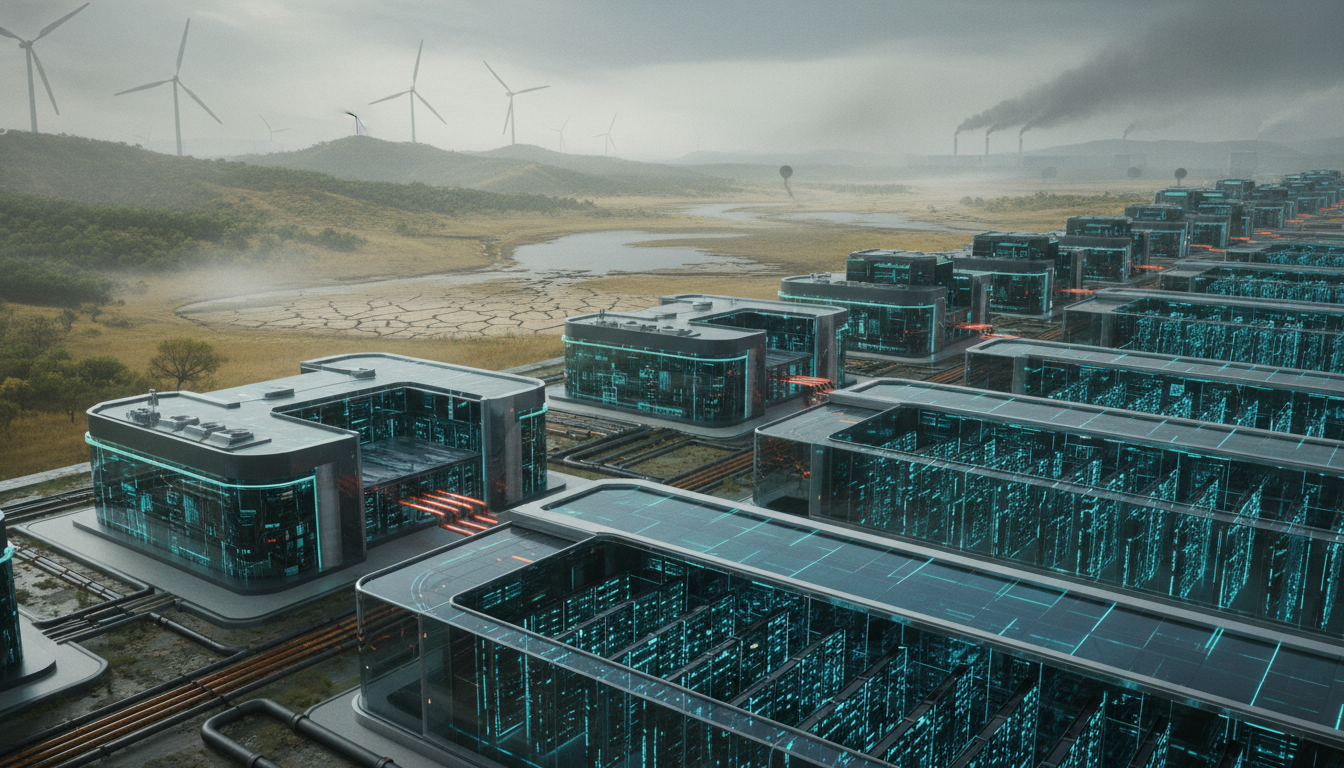
Beyond electricity, water consumption is another critical concern. Data centers require substantial water for cooling, with AI growth potentially draining 731 to 1,125 million cubic meters of water per year in the U.S. by 2030 – comparable to the annual household water usage of 6 to 10 million Americans. Alarmingly, over half of new data centers developed since 2022 are situated in water-stressed regions. The rapid obsolescence of AI hardware, particularly GPUs, also exacerbates the growing problem of electronic waste, further stressing environmental resources.
Innovating for a Greener Future: Startups Leading the Charge
In response to these daunting challenges, a wave of green energy startups is emerging, bringing innovative solutions to the forefront. These companies are not just optimizing existing systems; they are fundamentally rethinking how data centers are powered, cooled, and integrated into their environments.
Powering AI with Renewables and Smart Storage
A primary focus for sustainability is integrating renewable energy directly into data center operations. Major tech companies are adopting 'power first' strategies, co-locating data centers with dedicated renewable generation. Startups are pushing this further, developing large-scale battery energy storage systems (BESS) to manage the intermittency of renewables and ensure continuous power for demanding AI workloads. Green hydrogen is also being explored as a viable option for backup generation and long-term energy storage, offering a truly emissions-free alternative to traditional fossil fuels. Companies like Bloom Energy are already deploying solid oxide fuel cells for reliable, scalable, and sustainable on-site power, capable of running on natural gas, hydrogen, or biogas.
Advanced Cooling and Waste Heat Solutions
Cooling is another energy-intensive aspect of data centers, especially with high-density AI hardware. Innovative startups are tackling this head-on with advanced liquid cooling systems, which can significantly reduce energy consumption by up to 50% and allow for greater compute density. Companies like ZutaCore with their HyperCool® technology and CoolestDC with custom oblique-fin designs are at the forefront. Beyond just efficient cooling, some pioneers are even turning waste heat into a resource. Deep Green (UK), for instance, is repurposing the heat generated by data centers to provide hot water for facilities like swimming pools, achieving free cooling for servers while simultaneously benefiting local communities.
Pioneering Green Data Center Infrastructure
The very design and location of data centers are being reimagined. Startups like Soluna (USA) are building data centers co-located with renewable energy plants, utilizing surplus energy for AI and blockchain applications. IREN (Australia) operates data centers entirely on 100% renewable energy, specifically catering to high-density AI cloud services. Crusoe (USA) takes an innovative approach by converting stranded energy, such as flared natural gas, into computational power, effectively turning environmental liabilities into assets for AI infrastructure. These companies demonstrate a commitment to embedding sustainability from the ground up.
Efficiency at the Core: AI Chip Innovation
Ultimately, the most sustainable energy is the energy not consumed. This principle drives innovation in AI chip design. Companies like d-Matrix (USA) are developing high-efficiency computing platforms, such as their Corsair™ architecture, specifically for generative AI inference. Their goal is to achieve significantly higher energy efficiency compared to traditional GPU-based systems, reducing the power demands at the source and offering a fundamental shift towards more sustainable AI computation.
| Startup Name | Location | Key Solution/Focus | Environmental Impact |
|---|---|---|---|
| Deep Green | UK | Waste Heat Reuse for Community Facilities | Reduces energy waste, provides free cooling for servers, lowers community heating costs. |
| Soluna | USA | Renewable-Powered Data Centers | Utilizes surplus renewable energy, reduces reliance on grid power and fossil fuels. |
| Crusoe | USA | Renewable-Powered AI Infrastructure | Converts stranded energy (e.g., flared gas) into computational power, mitigating emissions from waste. |
| Exowatt | USA | Modular Thermal Energy Storage | Captures solar energy as heat, converts to electricity on demand, reduces grid strain. |
| d-Matrix | USA | High-Efficiency AI Inference Chips | Significantly reduces energy consumption at the chip level for generative AI workloads. |
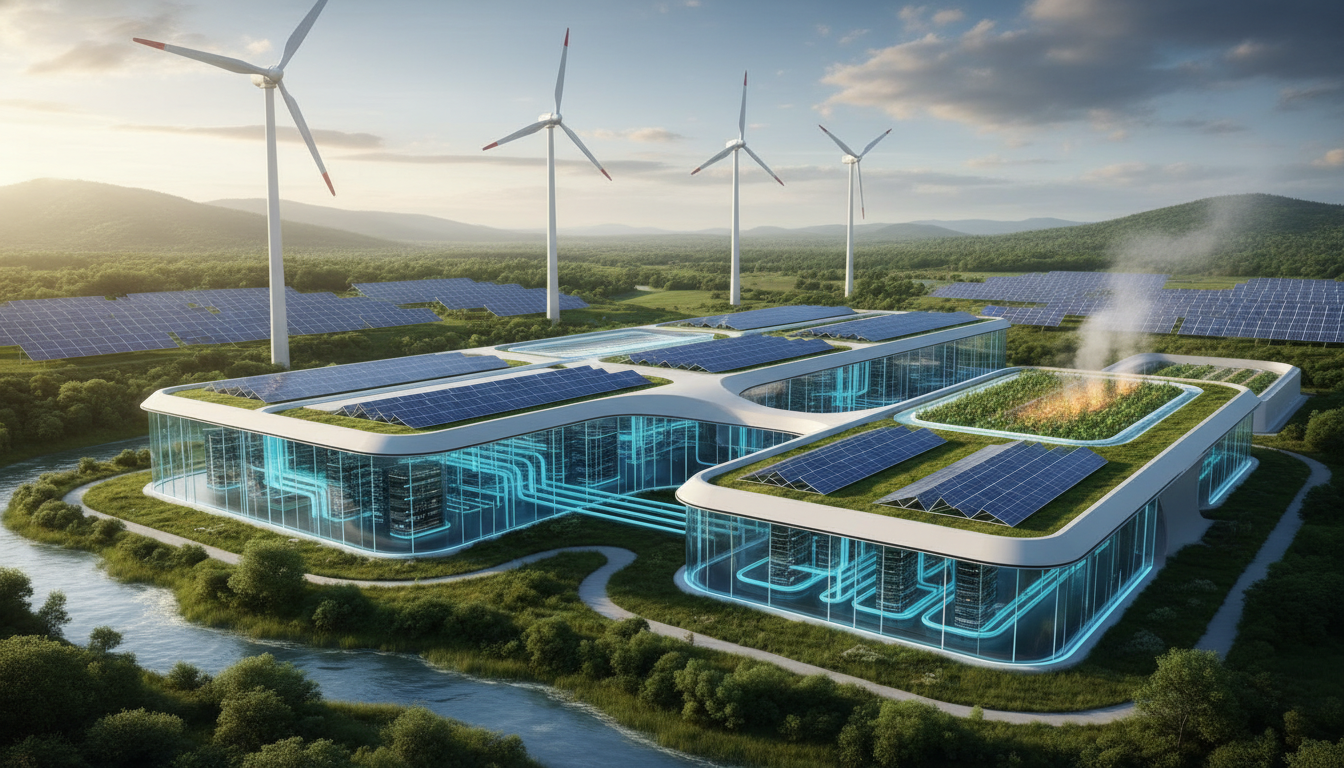
The 'scream' of data centers is a stark reminder of the environmental costs of our digital future. However, the rapid growth of green energy startups offers a compelling counter-narrative. By integrating renewables, optimizing cooling, reusing waste heat, and designing more efficient hardware, these innovators are not just mitigating impact; they are forging a path towards a truly sustainable AI ecosystem. Their work is critical in ensuring that the AI revolution empowers humanity without compromising the health of our planet.