$ open posts/germany-startup-ecosystem-deeptech-ai-resilience-growth-2024-2026
Germany's Startup Ecosystem: DeepTech, AI, and Resilience Driving Growth (2024-2026)
Germany's startup ecosystem has firmly established itself as a powerhouse in Europe and a significant player on the global stage. With a robust framework of research institutions, a highly skilled engineering workforce, and strong industrial ties, the nation is fostering a new generation of innovators. The period between 2024 and 2026 has seen a distinct shift, with German startups increasingly focusing on 'reference and resilience technologies'—encompassing defense systems, energy security, critical infrastructure, climate solutions, and industrial AI.
This strategic pivot, coupled with a dominant emphasis on DeepTech and Artificial Intelligence, underscores Germany's commitment to building foundational technologies that address pressing global challenges. The ecosystem's resilience and growth trajectory offer a compelling narrative of innovation, attracting substantial investment and nurturing a vibrant community of trailblazing companies.
Germany's Thriving Startup Ecosystem: A Deep Dive into Trends (2024-2026)
Globally, Germany's startup ecosystem holds the #7 position, and it stands as #3 in Western Europe, demonstrating remarkable vitality with a 13.5% increase in activity over the past year. This growth is not merely quantitative; it reflects a qualitative evolution towards more impactful and sustainable ventures.
A critical trend is the pronounced shift towards DeepTech innovation. German DeepTech companies collectively secured €1.7 billion across 78 deals in 2024, highlighting investor confidence in technologies rooted in scientific discovery and engineering breakthroughs. Within this, Artificial Intelligence has emerged as a dominant theme, with over one in four new startups founded in 2025 integrating AI as a core business model, a significant jump from 18.3% in 2024. AI's magnetic pull on capital is undeniable, capturing 50% of global venture capital funding in 2025.
Furthermore, the German startup scene exhibits a strong preference for the B2B revenue model, adopted by 74.7% of companies. This reflects a strategic choice for predictable enterprise sales over consumer markets. A telling sign of maturity and prudence is that 78.8% of German startups are now prioritizing profitability over aggressive growth, signaling a more sustainable and resilient approach to business development.
Navigating the Funding Landscape and Key Innovation Hubs
The financial health of the German startup ecosystem remains robust. In 2025, German startups attracted an impressive €8.4 billion in venture capital investment, marking the third-largest sum ever recorded and a nearly 20% increase from the previous year, even amidst a decline in the overall number of deals. The momentum continued into 2026, with $4.03 billion raised across 187 equity funding rounds by May, representing a 22.53% rise compared to the same period in 2025.
Beyond traditional VC, venture debt has also surged, increasing by 27.3% year-over-year to €17.2 billion in 2024, accounting for 14% of all VC investments. This diverse funding landscape is supported by a substantial European dry powder (committed but undeployed VC capital) reaching a record €73 billion in 2024, indicating ample capital ready to be deployed.
Top-funded sectors in 2025 underscore the strategic focus of German innovation, with Energy leading at $1,873.26 million, followed by Financial Services at $1,340 million, and Artificial Intelligence at $544.64 million.
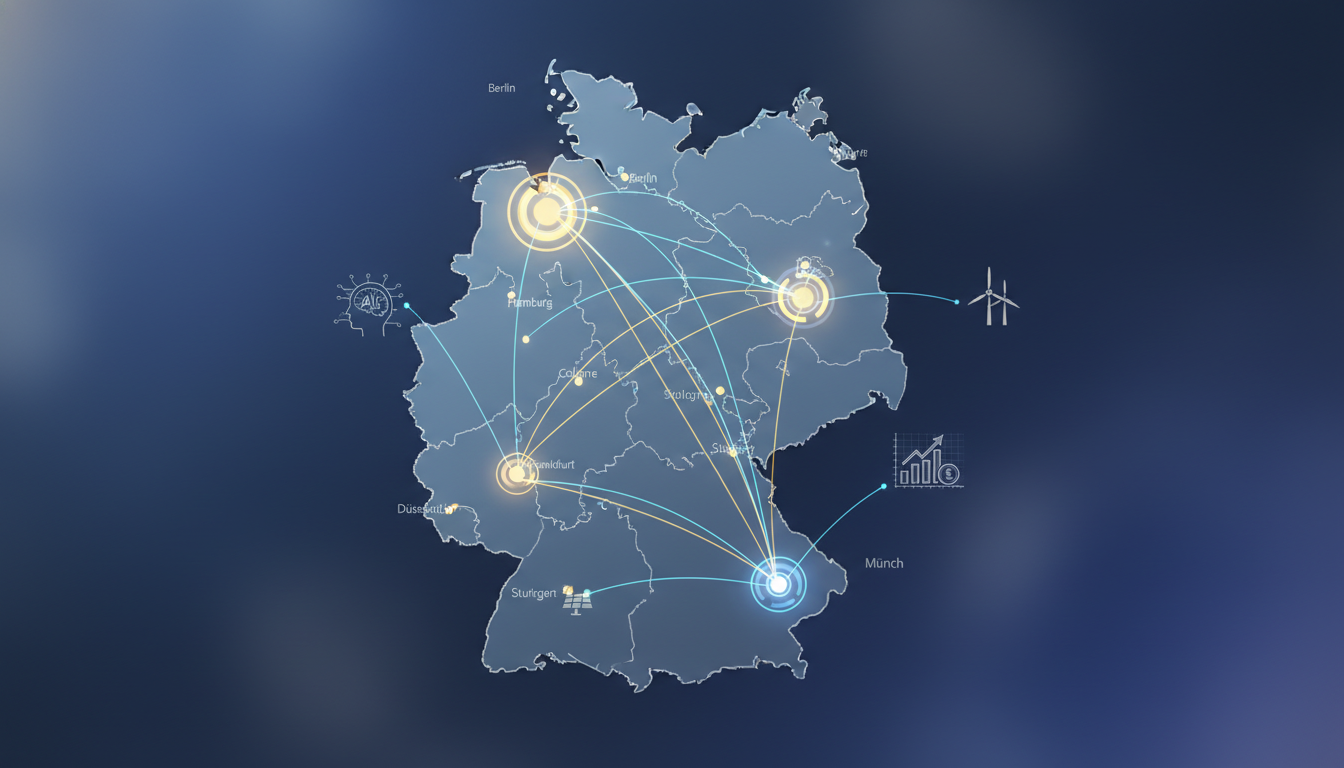
Germany's innovation is geographically concentrated in dynamic hubs:
- Berlin, Munich, and Hamburg: These cities consistently lead in the sheer number of startups.
- Munich: Stands out with 19.3 startups per 100,000 inhabitants, closely followed by Berlin with 16.8.
- Specialized Hubs: Both Berlin and Munich are prominent centers for AI, GreenTech, and DeepTech. Research-oriented cities like Aachen, Potsdam, Darmstadt, and Karlsruhe also contribute significantly to the nation's technological advancements.
Germany's Unicorns and Emerging Innovators to Watch
Germany is home to a substantial number of unicorn startups—companies valued over $1 billion—with estimates ranging from 33 to 48. These high-value companies, alongside a wave of new, promising ventures, are defining the future of technology. To provide a clearer picture of this dynamic landscape, here's a comparison of some of the most notable players:
| Startup | Focus Area | Latest Funding (Year) | Valuation/Status |
|---|---|---|---|
| DeepL | AI Language Translation | €258M (May 2024) | €1.7B Valuation (Unicorn) |
| Helsing | AI Defense Technology | €600M (2025) | €3.4B Valuation (Unicorn) |
| Quantum-Systems | AI-powered Autonomous Drones | €95M (2024) | Unicorn (2025) |
| Sunfire | Green Hydrogen Production | >€500M (2024) | Key Player in Green Energy |
| Black Forest Labs | AI Visual Intelligence Research | USD 300M (2025) | High-Potential Emerging Startup |
| n8n | Workflow Automation for Developers | $52M | Unicorn |
DeepL: AI Language Prowess
Based in Cologne, DeepL has established itself as Germany's most valuable AI company, revolutionizing language translation with its advanced neural network technology. The company raised €258 million in May 2024, achieving a €1.7 billion valuation, with total funding exceeding $400 million, solidifying its unicorn status.
Helsing: Advancing AI in Defense
Munich-based Helsing is at the forefront of AI defense technology, developing software that enhances the capabilities of democratic armed forces. The company secured a substantial €450 million in a Series C round in July 2024 at a €3.4 billion valuation, followed by €600 million in Series D financing in 2025, having achieved unicorn status in 2023.
Quantum-Systems: Autonomous Drone Innovation
Hailing from Bavaria, Quantum-Systems specializes in AI-powered autonomous drones for both defense and commercial applications. With €95 million raised in 2024, the company's rapid growth saw it achieve unicorn status in 2025, underscoring its impact in the autonomous systems sector.
Sunfire: Pioneering Green Hydrogen
Dresden-based Sunfire is a key player in the green energy transition, developing cutting-edge technology for industrial-scale green hydrogen production. The company secured over €500 million in 2024, reflecting the urgent global demand for sustainable energy solutions.
Black Forest Labs: Cutting-Edge AI Research
Founded in 2024 in Freiburg im Breisgau, Black Forest Labs is an AI research powerhouse focused on visual intelligence. Despite its nascent stage, the company attracted a remarkable USD 300 million funding round in 2025, signaling high expectations for its contributions to advanced AI.
STARK: Next-Gen Defense Systems
STARK, a Berlin-based startup founded in 2024, is innovating in defense technology, particularly for unmanned systems. The company has already raised over €66 million, contributing to Germany's growing 'reference and resilience technologies' sector.
n8n: Empowering Workflow Automation
Founded in 2019 in Berlin, n8n provides a powerful network automation tool for developers, enabling seamless workflow integration. After raising $52 million, n8n recently joined the coveted Unicorn Club, demonstrating the strong market demand for efficient automation solutions.
Germany's startup ecosystem is clearly in a period of dynamic transformation, marked by significant investment, a strategic focus on DeepTech and AI, and a commitment to building profitable, resilient businesses. As these innovators continue to push boundaries, Germany's role as a global leader in technological advancement is only set to grow. What emerging technologies or startup regions do you believe will define the next wave of innovation?