$ open posts/japan-2026-startups-utility-not-hype
The Pragmatist’s Pivot: Why Japan's 2026 Startups Win on Utility, Not Hype
The global venture capital landscape, despite reaching a monumental $297 billion in funding, has become an arena of extreme selectivity. In 2026, investors are no longer swayed by technology for technology's sake; instead, they are searching for profound utility and demonstrable impact. This shift is particularly evident in Japan, where a concept we term 'Infrastructure Fatigue' has taken hold. Users and enterprises are tired of accumulating tools and platforms that add complexity without delivering clear, immediate results. They are hungry for solutions that bridge the 'Deployment Gap' – making complex frontier tech easy to use and integrate.
Japan's startup ecosystem is uniquely positioned in this new reality, leaning heavily into deep tech, 'Physical x AI,' and robust enterprise solutions. The country's strategic focus on innovation, supported by government initiatives and a surge in university spinouts (over 5,000 university-born startups by 2024), is fostering a new generation of companies. These ventures are not just building; they are solving, driven by the pragmatic demands of a market that values frictionless operations above all else. This isn't just about technological advancement; it's about making advanced technology work, seamlessly, in the real world.

The Macro View: Japan's Pragmatic Shift in 2026
The prevailing sentiment in 2026 is that capital is flowing to quality, particularly in deep tech, AI, robotics, and industrial software. While traditional VC investment has seen a decline, strategic investment (SI) from corporate venture capital (CVC) and financial institutions surged by 27.6% in 2025. This pivot is a direct response to rising capital costs and a desire for more direct, impactful collaborations. Japanese startups are increasingly aligning with corporate partners who can provide not just capital, but also market access and operational expertise, highlighting a maturation of the ecosystem. The high M&A ratio for startup exits at 84.5% further underscores this trend of strategic integration over standalone public offerings.
Case Study 1: Sakana AI – Rethinking Generative AI for Practicality
Sakana AI stands out in a crowded generative AI landscape by focusing on a thesis that moves beyond generic large language models. Their approach is not merely about wrapping existing AI capabilities but about developing novel architectures and agentic workflows that address specific 'logic bottlenecks' within enterprise operations. While specific technical details are often proprietary, their significant funding in 2025 signals a belief in their ability to deliver more efficient, specialized, and domain-aware AI solutions.
The business moat for Sakana AI lies in its potential to offer truly differentiated AI that integrates deeply into enterprise systems, solving complex, industry-specific challenges rather than just providing broad-stroke capabilities. This means less 'AI for AI's sake' and more 'AI for business outcome'—a critical distinction in 2026. The primary risk, however, remains the scalability of these highly specialized AI models and the challenge of proving a clear, repeatable ROI across diverse enterprise clients, especially as global competition in advanced AI intensifies.
Case Study 2: Telexistence – Bridging Digital Intelligence with Physical Execution
Telexistence embodies Japan's 'Physical x AI' trend, demonstrating how digital intelligence can directly solve real-world industrial challenges. Their thesis is clear: combat labor shortages and enhance operational efficiency through remote robotics and automated systems, particularly in the retail sector. Their convenience-store robots are not just novelties; they are rapidly expanding, indicating strong commercial traction and a clear value proposition for buyers facing acute staffing issues.
The strategic hook of Telexistence is its remarkable interoperability. Their robots are designed to fit into existing human environments, minimizing the need for massive infrastructure overhauls. This 'drop-in' capability significantly lowers the barrier to adoption for traditional industries like retail. The buyer story is compelling: faced with an aging population and shrinking workforce, businesses are signing contracts not out of curiosity, but out of necessity. Telexistence offers a tangible solution to a critical operational challenge, enabling consistent service and cost savings.
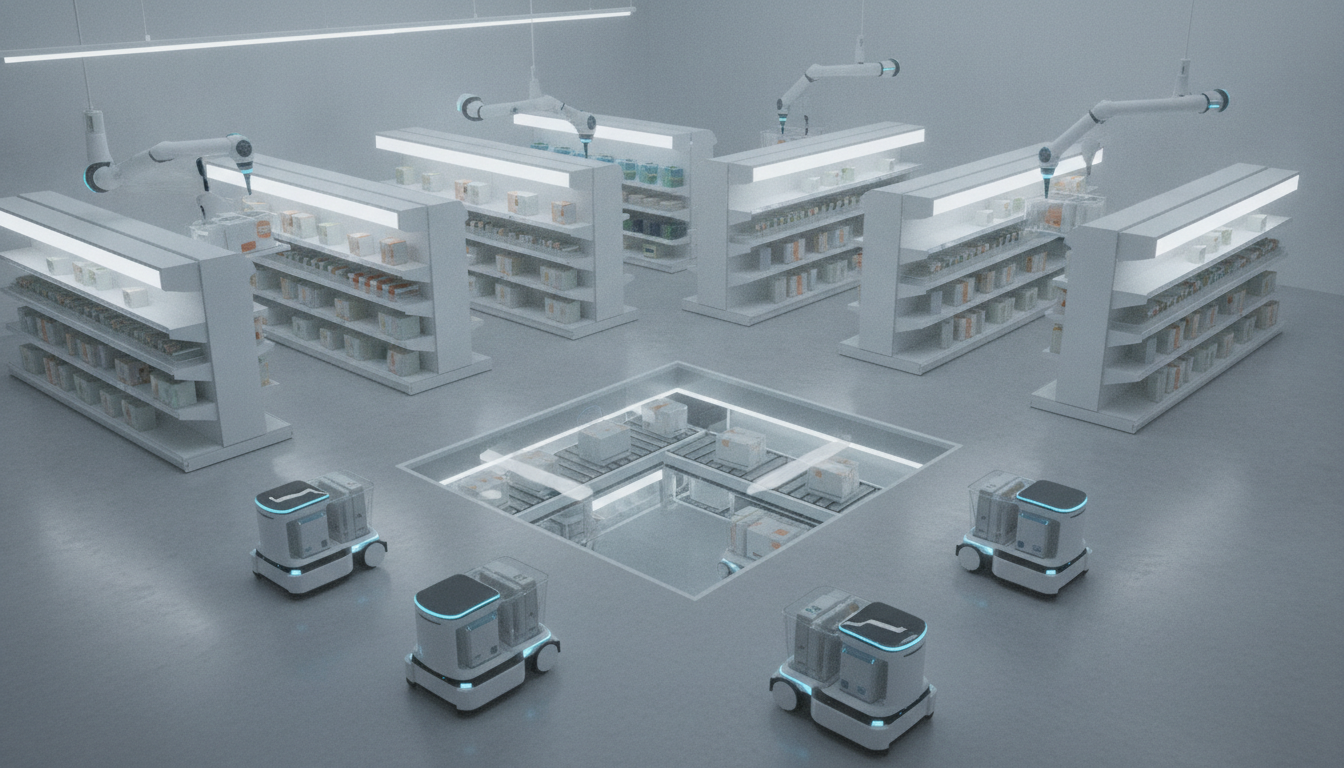
Automated Operations: A Solution to Japan's Labor Challenge
Japan's demographic pressures make solutions like Telexistence's particularly vital. The ability to remotely operate and automate tasks in environments like convenience stores directly addresses the severe labor shortages impacting the service sector. This isn't just about efficiency; it's about maintaining basic operational capacity, making Telexistence a strategic partner for businesses looking to future-proof their operations against demographic shifts.
Case Study 3: Akari – Streamlining Enterprise AI Operations
Akari represents a new breed of enterprise AI startup, focused intently on reducing 'Operational Friction' for the modern CTO. Their thesis centers on achieving profitability through strategic system integration (SI) projects for large enterprises, a model that contrasts with many product-only AI ventures. This approach allows Akari to deeply embed its AI solutions into existing workflows, proving value directly within complex organizational structures.
The workflow hook is Akari's ability to integrate seamlessly rather than creating new silos. By taking on SI projects, they understand the nuances of enterprise systems and can tailor their AI to fit, ensuring high adoption rates and tangible results. This focus on practical, integrated solutions has propelled Akari to 'unicorn-to-be' status, supported by large-scale investment from strategic partners. Their success highlights a crucial metric in 2026: not just raw technological power, but the ability to translate that power into demonstrable, integrated enterprise value and, crucially, profitability.
The Synthesis: Frictionless Operations as the New Value Driver
The common thread weaving through Sakana AI, Telexistence, and Akari is their unwavering commitment to solving for 'Friction.' Whether it's the logic bottlenecks that hamper advanced AI deployment, the labor shortages that cripple physical operations, or the operational complexities that plague enterprise CTOs, these companies are delivering solutions that make systems work more smoothly, efficiently, and effectively.
In the 2026 economy, 'Frictionless Operations' is emerging as the most valuable asset. Investors and customers alike are prioritizing pragmatic, utility-driven innovation over speculative hype. Japan's startup ecosystem, with its strong emphasis on deep tech, 'Physical x AI,' and strategic enterprise partnerships, is a powerful testament to this global pivot. The companies that can truly integrate, automate, and streamline critical processes are the ones poised for sustained success, proving that in a complex world, simplicity and utility are the ultimate differentiators.